10
從「南越」到「越南」-帝國邊疆、地域認同與民族國家的形成
《越南歷史與文化》Vietnamese History and Culture
From “South Vietnam” to “Vietnam”:
Imperial Frontiers, Regional Identity, and the Formation of the Nation-State
Vietnam’s nationhood and culture have not been immutable but continuously reconstructed through imperial frontiers, colonial rule, and north-south competition. From “South Vietnam” to “Vietnam”, and through changes in script, education, religion, and print culture, modern national identity gradually formed. Its culture integrates influences from China, Southeast Asia, and France, displaying diversity and resilience amid regional differences and historical shifts.
/ By Chiang, Bo-Wei
越南並非一個自古不變、自然生成的民族共同體,而是在中華帝國南緣與東南亞海陸世界交會的邊疆上,透過國號與疆域的重新界定、漢字 / 喃字 / 國語字的文字轉換、科舉與新式教育、宗教祭祀、殖民印刷文化,以及戰爭與離散記憶,不斷被書寫、想像和實踐出來的文化共同體(Anderson, 2006)。
前殖民時期的越南史,從文化史角度來看,是統治者、士人與地方社群如何透過神話、文字、祭祀、國號和歷史書寫,逐步構成日後被稱為「越南」的政治文化共同體。大越菁英雖共享漢文政治文化,並以儒家禮制、皇帝稱號及華夷語彙建立與北方相對的「南國」正統,但其社會也長期嵌入南海貿易、占婆-高棉世界與山地族群網絡,因而同時具有東亞漢文傳統與東南亞海陸文化的特徵(Li, 1998; Taylor, 2013)。
貉龍君、嫗姬、雄王與文郎國等傳說,不能視為可考證的上古史實,但卻是後世建構共同祖源與土地認同的重要文化記憶。十五世紀以後,王朝史家開始有意識地蒐集、整理雄王神話,國家祭典又與紅河三角洲的地方廟祀結合,使雄王逐漸成為超越個別村落的共同祖先。另一方面,東山銅鼓、古螺城及紅河流域聚落提供較可靠的物質證據,顯示漢帝國南下並非在「文化真空」或原始部落中進行拓荒,而是將一個早已具備動員力、城牆防禦工事與貿易體系的複雜社會,納入大一統的郡縣體制(Kim et al., 2010; Nguyen, 2013; 鄭永常,2019)。
文/江柏煒(臺灣師範大學東亞學系特聘教授)
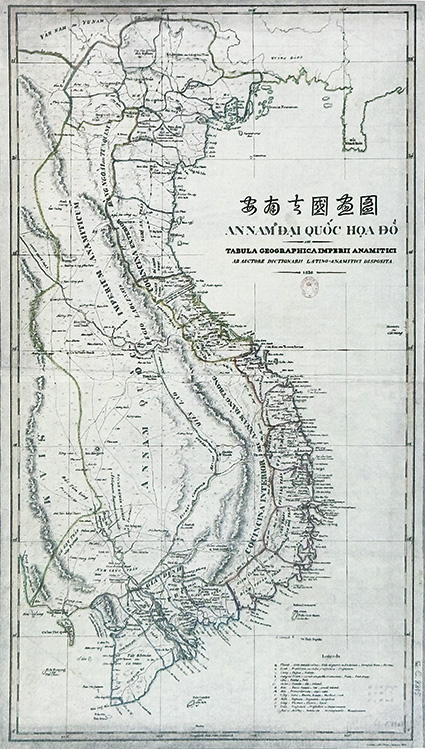
(附圖:法國傳教士Jean-Louis Taberd繪,《安南大國畫圖》(An Nam Đại Quốc Họa Đồ),1838年。)