09
從臺北湖到山水融合高歧異度的當代首都
《論述》Discourse
From Taipei Lake to a Scenic, Diverse Green Capital
This article departs from the 2020-2030 timeline and examines changes in the basin and surrounding mountain landscapes of the lower Tamsui River to explore how historical transformations may influence the future. It considers not only political policies and rigid economic drivers but also intangible, flexible influences, and how these may shape or open up new perspectives on the capital’s living environment beyond the “architectural shell.”
/ By Monica Kuo
本次「城市演序:2030臺北建築未來」特展與相關論壇交流、專文論述係設定特定時程2020-2030,此包括回顧過去6年並前瞻未來4年時間軸之變遷,當然此時間軸上首都臺北因土地有限又受迫於都市更新民眾之期待以及AI世代快速發展,真的有計畫趕不上變化之迫切感。
惟就此10年時間軸而言,「建築」規劃、設計、興建絕不只是自啟動起到完成於此時間軸內。尤其是大型公共建設、都市再生、都市更新……,其不僅受國內乃至國際政經影響,也受社會結構與人民之思惟與生活價值觀影響至鉅。
更有甚者,任何一處都市再生自形成到落實,幾乎多以「十年」為單位,法令制度、政策、決策領導力乃至更切身之「權益關係人」、不同階層團體、家族、個人……其因素相當錯綜複雜,且非「理論」與「預算」「計畫甘特圖」……所能預期。
此外「建築」的定位義為何?是個別建物設計?居民的棲所?社區之總體建築群之意象?與商業社會民生福祉相關、互為影響,而所呈現出具體有形「建設」意象?
文、圖/郭瓊瑩(中華民國景觀學會名譽理事長、中華民國建築學會會士、IFLA-APR前主席)
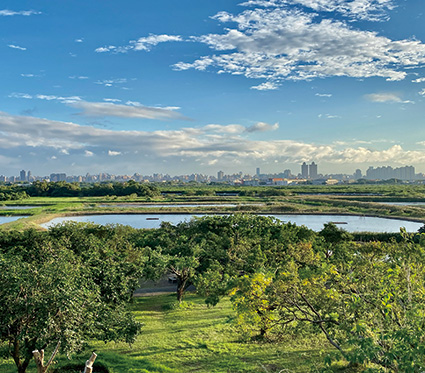
(附圖:昔時的臺北湖今日已成為首都,淡水河系地質、地形水文變遷仍有部分濕地、埤塘留存,成為臺北盆地重要生物棲所與滯洪區。)