10
從阮朝、法國殖民到新興獨立現代國度-越南建築的蛻變脈絡
《越南建築發展歷程》The Development of Vietnamese Architecture
From the Nguyen Dynasty and French Colonialism to an Emerging Independent Modern Nation: The Transformative Context of Vietnamese Architecture
This article begins with Vietnam’s historical development, examining the influence of Chinese culture and French colonialism on Vietnamese architecture. Focusing on urban planning and official buildings during French Indochina, it analyzes how architecture became a spatial representation of colonial power, and how Vietnamese architecture gradually evolved from traditional and colonial forms toward modernity and cultural self-assertion.
/ By Wang, Wei-Chou
越南超過千年,與中國維持非常密切的關係,西元938年,吳權在白藤江之戰擊敗南漢軍隊,968年丁部領建立大瞿越國,越南正式脫離中國封建政權直接統治。獨立後的越南各個朝代,李朝、陳朝、後黎朝、阮朝等,多以中國為宗主國,實行冊封與朝貢的禮法體制。統治者採用中國式的制度治國,文化方面融合了儒、佛、道三教,在政治制度與文化上受到中國影響深遠。
十九世紀後半葉,法國將越南作為遠東地區殖民的目標,進而對越南發動多次的軍事行動,由南到北逐步拿下交趾支那(南圻)、安南(中圻)與東京(北圻)。法國於1887年成立法屬印度支那聯盟,1893年納入寮國,成為具備東京、安南、交趾支那、柬埔寨及寮國共五個省份聯盟。法屬印度支那聯盟一直持續到1954年的滇邊府戰役失利後解體,成為今日的越南、寮國、柬埔寨三國。
法屬印度支那聯盟開始針對城市進行都市計畫,同時間也透過興建官方建築確認其殖民權力在空間上的落實。因此,建築作為殖民權力空間書寫的重要媒介。本文嘗試藉由法屬印度支那聯盟在不同時期的建築樣貌,作為解讀殖民空間權力的表徵及介質。
文、圖/王維周(臺灣師範大學藝術史研究所副教授)
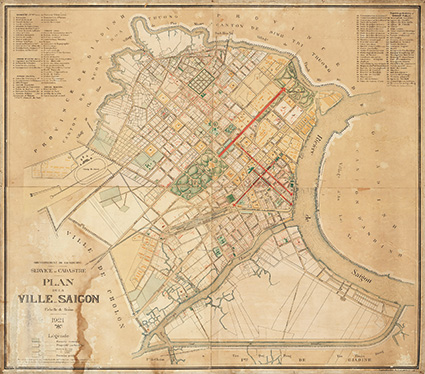
(附圖:西貢地圖(1921年))