10
越南建築中的傳統、殖民與在地現代性
《越南建築發展歷程》The Development of Vietnamese Architecture
Tradition, Colonialism, and Local Modernity in Vietnamese Architecture
Vietnamese architecture continuously translates between tradition, colonialism, and modernity, reflecting the fusion of diverse cultures, climates, and local craftsmanship. Its experience offers lessons for Taiwan to center on local conditions, integrate cultural preservation, resource recycling, climate adaptation, and social inclusion, and transform local knowledge into a foundation for contemporary architecture and urban governance.
/ By Chiang, Bo-Wei
越南的地緣環境既處於中華帝國南緣,也連接南海、占婆與高棉世界;十九世紀以後,又先後被納入法國殖民體制、冷戰分裂格局與全球資本網絡。因此,越南建築史並不是一條從「傳統」單向走向「現代」的線性道路,而是一部不斷藉由空間重繪疆界、重組身分的文化史(高夏,2018;Taylor, 2013)。
王朝以前與王朝之城:多重文化地景的塑造
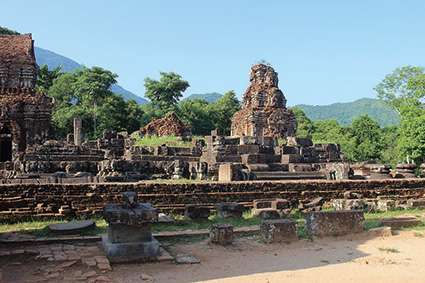
早期越南的建築文化,除了「越族」傳統外,中部美山聖地約在四至十三世紀間發展為占婆(Champa)重要的宗教與政治中心。美山聖地的塔廟以燒製磚、石柱及砂岩浮雕構成,以主塔象徵印度教宇宙中心須彌山。這些建築接受南亞宗教與圖像影響,卻由占族工匠轉化成適應本地材料、技術和山谷聖境的體系。美山於1999年以「美山聖地」(My Son Sanctuary)之名列入《世界遺產名錄》(如附圖)。其遺產化一方面保存了占婆建築與宗教文化,另一方面也使原屬占族歷史的神聖空間,被重新編入現代越南國家的多民族文化遺產敘事(UNESCO World Heritage Centre, n.d.-d)。
文/江柏煒(臺灣師範大學東亞學系特聘教授)
(附圖:美山聖地B、C、D群占婆塔廟。(攝影:Gary Todd, 2014)資料來源:Wikimedia Commons;CC0 1.0)